Table of Contents
The decision between hiking shoes and hiking boots often comes down to personal preference, terrain, and weather conditions. While both options have their advantages and disadvantages, the right footwear can make all the difference between a comfortable and enjoyable hike and a frustrating and potentially hazardous one.
Understanding Trail Conditions
All hikes are not created equal, and different trail conditions call for different types of hiking footwear. A light hike on a well-groomed dirt trail is vastly different from a full-on trek through the mountains. For example, a hiking shoe’s lightweight and flexible design may be perfect for a short, easy day hike, but it may not provide enough support or protection for a more challenging hike or those with rugged terrain.
- A hiking shoe’s lower profile and lack of ankle support make it better suited for smooth, well-maintained trails with minimal obstacles.
- A hiking boot, on the other hand, provides added ankle support and protection, making it a better choice for more rugged or uneven terrain.
Personal Preference and Fit
Personal preference and fit are also crucial factors to consider when choosing between hiking shoes and hiking boots. Hiking shoes are typically more lightweight and flexible, making them a popular choice for day hikers and casual adventurers. However, they may not provide enough support or protection for more challenging hikes or those with rugged terrain.
- Mid-to-high-cut hiking boots provide added ankle support and protection, making them a better choice for more rugged terrain.
- Low-cut hiking shoes offer more mobility and flexibility, making them a better choice for smooth, well-maintained trails.
Key Features to Consider
When choosing between hiking shoes and hiking boots, there are several key features to consider. These include height, outsole, material, weight, breathability, and waterproofing.
| Feature | Hiking Shoes | Hiking Boots |
|---|---|---|
| Height | Lower profile | Higher shaft |
| Outsole | Less rigid, more flexible | More rigid, stiffer |
| Material | Lightweight, breathable materials | Rugged construction, reinforced uppers |
| Weight | Lighter | Heavier |
| Breathability | Mesh uppers or synthetic materials | Less breathable due to higher shaft |
| Waterproofing | Less waterproof due to lower profile | More waterproof due to higher shaft |
Which is Better: Hiking Shoes or Hiking Boots?
Ultimately, the best hiking footwear for you depends on personal comfort preferences, physical needs, and typical hiking environment. If you typically hike shorter trails, prefer a lightweight feel, and prioritize comfort and breathability in fair weather, hiking shoes may be the better choice. However, if you’re venturing into rugged terrain, carrying a heavy backpack, need ankle support, or expect wet trail conditions, hiking boots are likely the better option.
“Reflecting on past experiences with trails and the footwear you used will be valuable in your decision-making process.” – Christopher J.
In any event, it’s essential to try on both styles at a gear store and take a few test strides to ensure a comfortable and supportive fit. Don’t forget to wear your hiking socks to the store and consider shopping at the end of the day, when your feet tend to be more swollen.
The right footwear can make all the difference between a comfortable and enjoyable hike and a frustrating and potentially hazardous one. By considering trail conditions, personal preference, and key features, you can make an informed decision and choose the best hiking footwear for your next adventure.
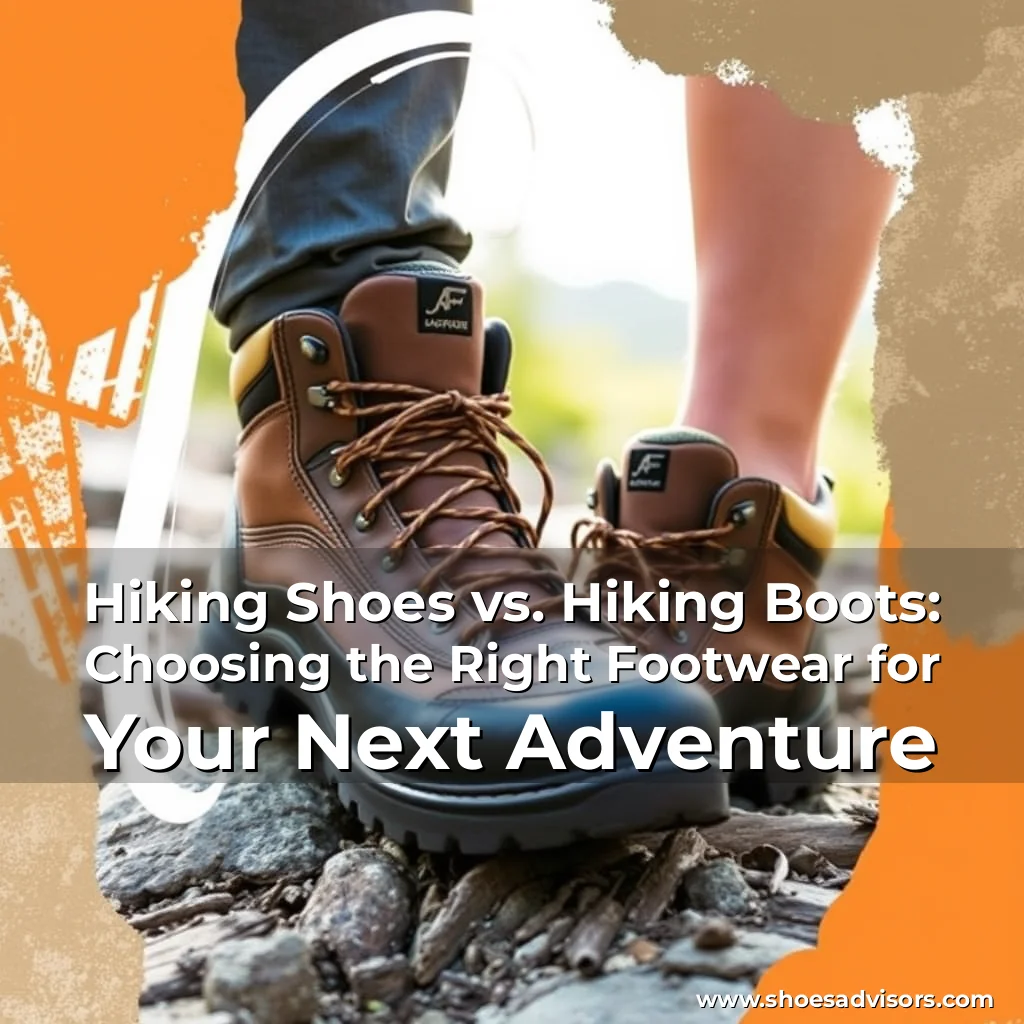
Hiking Shoes vs. Hiking Boots: Choosing the Right Footwear for Your Next Adventure
The decision between hiking shoes and hiking boots often comes down to personal preference, terrain, and weather conditions. While both options have their advantages and disadvantages, the right footwear can make all the difference between a comfortable and enjoyable hike and a frustrating and potentially hazardous one.
Differentiating Between Hiking Shoes and Hiking Boots
Hiking shoes and hiking boots are both designed for hiking, but they have distinct differences in terms of design, functionality, and features.
Hiking shoes are designed for short to medium-length hikes on smooth, well-maintained trails. They are typically lighter, more flexible, and offer better breathability than hiking boots.
Hiking boots, on the other hand, are designed for longer, more challenging hikes on rugged terrain. They offer added ankle support and protection, making them a better choice for hiking in rough or uneven conditions.
Key Features to Consider
When choosing between hiking shoes and hiking boots, there are several key features to consider. These include:
- Height: The height of the shoe or boot can affect the level of ankle support and protection it offers.
- Outsole: The outsole of the shoe or boot can affect the level of traction and stability it offers.
- Material: The material used to make the shoe or boot can affect its durability, breathability, and weight.
- Weight: The weight of the shoe or boot can affect the level of comfort and mobility it offers.
- Breathability: The level of breathability of the shoe or boot can affect the level of comfort and moisture management it offers.
- Waterproofing: The level of waterproofing of the shoe or boot can affect its ability to keep your feet dry in wet conditions.
Ultimately, the Best Hiking Footwear for You is Up to You
The best hiking footwear for you will depend on your personal preferences, hiking style, and the terrain you will be hiking on. It’s essential to try on both hiking shoes and hiking boots to see which one feels most comfortable and supportive for you.
By considering the key features and differences between hiking shoes and hiking boots, you can make an informed decision and choose the best hiking footwear for your next adventure.
Choosing the Right Hiking Footwear for Your Next Adventure
The decision between hiking shoes and hiking boots often comes down to personal preference, terrain, and weather conditions. While both options have their advantages and disadvantages, the right footwear can make all the difference between a comfortable and enjoyable hike and a frustrating and potentially hazardous one.
Choosing the Right Footwear for Your Hike
The right footwear can make all the difference between a comfortable and enjoyable hike and a frustrating and potentially hazardous one. When choosing between hiking shoes and hiking boots, it’s essential to consider the following factors:
- Trail conditions: The type of terrain you will be hiking on will affect the type of footwear you need. For example, if you will be hiking on smooth, well-maintained trails, hiking shoes may be sufficient. However, if you will be hiking on rugged or uneven terrain, hiking boots may be a better choice.
- Weather conditions: The weather conditions you will be hiking in will also affect the type of footwear you need. For example, if you will be hiking in wet or snowy conditions, hiking boots may be a better choice.
- Your hiking style: Your hiking style will also affect the type of footwear you need. For example, if you are a faster hiker, hiking shoes may be a better choice. However, if you are a more leisurely hiker, hiking boots may be a better choice.
- Your physical needs: Your physical needs will also affect the type of footwear you need. For example, if you have ankle injuries, hiking boots may be a better choice.
Conclusion
The decision between hiking shoes and hiking boots is not a simple one. However, by considering the factors mentioned above and trying on both options, you can make an informed decision and choose the best hiking footwear for your next adventure.
Remember, the right footwear can make all the difference between a comfortable and enjoyable hike and a frustrating and potentially hazardous one. By choosing the right footwear, you can ensure a safe and enjoyable hiking experience.
Choosing the Right Hiking Footwear for Your Next Adventure
The decision between hiking shoes and hiking boots often comes down to personal preference, terrain, and weather conditions. For example, if you have ankle injuries, hiking boots may be a better choice.
Choosing the Right Footwear for Your Next Adventure
When choosing between hiking shoes and hiking boots, it’s essential to consider the following factors:
- Height: The height of the shoe or boot can affect the level of ankle support and protection it offers.
- Outsole: The outsole of the shoe or boot can affect the level of traction and stability it offers.
- Material: The material used to make the shoe or boot can affect its durability, breathability, and weight.
- Weight: The weight of the shoe or boot can affect the level of comfort and mobility it offers.
- Breathability: The level of breathability of the shoe or boot can affect the level of comfort and moisture management it offers.
- Waterproofing: The level of waterproofing of the shoe or boot can affect its ability to keep your feet dry in wet conditions.
Conclusion
The right footwear can make all the difference between a comfortable and enjoyable hike and a frustrating and potentially hazardous one. By considering the factors mentioned above and trying on both options, you can make an informed decision and choose the best hiking footwear for your next adventure.
Remember, the right footwear is not just about the type of shoe or boot, but also about the fit, comfort, and support it provides.
By choosing the right footwear, you can ensure a safe and enjoyable hiking experience.
Choosing the Right Footwear for Your Hike
The decision between hiking shoes and hiking boots often comes down to personal preference, terrain, and weather conditions. For example, if you have ankle injuries, hiking boots may be a better choice.
Conclusion
The right footwear can make all the difference between a comfortable and enjoyable hike and a frustrating and potentially hazardous one.

news is a contributor at ShoesAdvisors.com. We are committed to providing well-researched, accurate, and valuable content to our readers.
You May Also Like



Share This Article
You Might Also Like